Why Brake Fluid Flushes Are So Important for High‑Performance Vehicles
High-performance cars ask a lot from their brakes. You might notice it the most when you get on the pedal hard from highway speeds, or after a spirited run on a favorite back road. Pedals that used to be firm can start to feel softer, and the stopping distance grows even if the pads and rotors still look fine. Very often, the real issue is tired brake fluid that has been cooked one too many times.
Why High-Performance Brakes Need Extra Attention
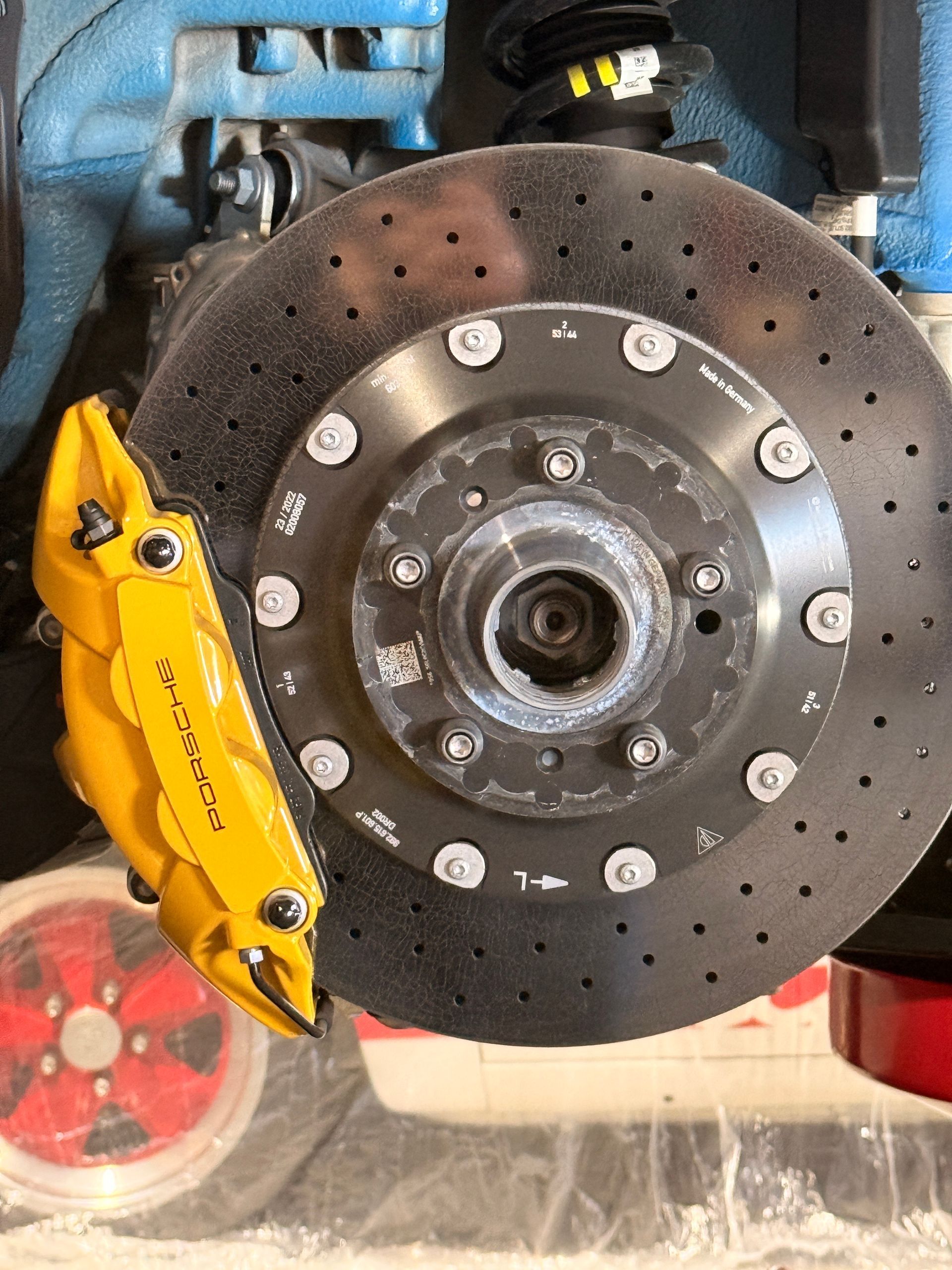
Bigger calipers, multi-piston designs, and grippier pads are great for stopping power, but they also build heat quickly. That heat travels into the brake fluid sitting behind every piston in the system. On a regular commute, the fluid may never get pushed very hard. Once you drive the car the way it was built to be driven, weak fluid shows up fast.
High-performance vehicles also tend to be heavier, faster, or both. That means every stop puts more energy into the brakes. If the fluid is old or contaminated, it cannot cope with that energy for long before performance starts to fade. We see a lot of powerful cars that feel “fine” in town but show spongy pedals once the brakes get hot.
What Brake Fluid Actually Does Under Hard Driving
Brake fluid is the link between your foot and the pads. When you step on the pedal, the master cylinder pushes fluid through lines to each caliper or wheel cylinder. Because fluid is not supposed to compress, the force transfers almost instantly to the pads that clamp the rotors.
Under repeated hard braking, fluid has to handle three jobs at once. It must transmit force without compressing, tolerate very high temperatures, and resist boiling even when things get hot. If it boils, tiny vapor bubbles appear in the lines. Vapor can compress easily, which is where that long, soft pedal comes from after a few hard stops.
How Heat and Moisture Break Down Brake Fluid
Most brake fluids used in performance and everyday cars are hygroscopic. They absorb moisture from the air over time. Even in a sealed system, that moisture creeps in through rubber hoses, seals, and caps. The more water in the fluid, the lower its boiling point becomes.
Heat cycles add to the problem. Every time the brakes go from cool to hot and back again, the fluid ages a little more. Old, dark fluid usually means it has picked up moisture and tiny particles from inside the system. In a high-performance car that sees spirited driving or track time, that breakdown happens faster than it would in a basic commuter.
Warning Signs Your Brake Fluid Is Past Its Prime
Tired fluid gives you hints before it becomes a real safety concern. Drivers often notice:
- A pedal that feels softer or travels farther after a few hard stops
- Brake performance is strong on the first stop, then gradually fades with each one
- Fluid in the reservoir that looks dark, murky, or almost brown instead of clear or light amber
In more severe cases, you might feel the pedal nearly sink toward the floor after a single panic stop, then recover somewhat once the brakes cool. That kind of behavior suggests the fluid is boiling under load, which is exactly what a fresh flush is meant to prevent.
Track Days, Towing, and Daily Driving: Different Risk Levels
Not every high-performance vehicle is driven the same way. A car that spends weekends at track days or autocross events will stress its brakes much more than one that mostly sees highway cruising. Heavy towing, mountain driving, or repeated emergency stops in city traffic can push fluid just as hard.
If you regularly work your brakes hard, flushing the system more often is a smart form of insurance. Waiting until the fluid is obviously dark or the pedal feels scary under heavy braking is cutting it close. We have seen cars come off a few hot laps with completely faded pedals simply because the fluid was several years old.
What Happens During a Professional Brake Fluid Flush
A proper flush does more than just crack a bleeder and let a little fluid drip out. The idea is to replace as much old fluid as possible with fresh, clean fluid of the correct type. The basic process usually includes:
- Inspecting the system for leaks, damaged hoses, or sticking calipers before the flush
- Using a pressure or vacuum system to push new fluid through each corner until clean fluid appears
- Bleeding the brakes in the correct order so no air gets trapped in lines or calipers
- Verifying pedal feel and checking for any warning lights or ABS issues afterward
Done correctly, a flush leaves the system full of fresh fluid with a high boiling point and a firm, consistent pedal. It also gives us a chance to spot hardware problems that could affect braking performance.
How Often Should High-Performance Vehicles Get a Brake Fluid Flush?
Intervals depend a lot on how the car is used. Many manufacturers suggest around two years for typical driving. For a car that sees regular spirited driving, towing, or track time, yearly fluid service is a reasonable guideline. Some owners choose to flush shortly before and sometimes after a heavy use season.
Instead of guessing, it helps to combine the factory recommendation with an honest look at your driving. If the car feels softer under braking than it used to, the fluid is dark, or you cannot remember the last flush, that is a strong hint it is time. Keeping brake fluid fresh is one of the more affordable ways to protect expensive performance brake parts and keep your stopping power consistent.
Get Brake Fluid Flushes for High-Performance Vehicles in St. Augustine, FL with Velocity Motorwerks
If your pedal feels softer during hard braking, the fluid in your reservoir looks dark, or you use your car the way it was meant to be driven, a brake fluid flush is a smart step. We can inspect your braking system, use the correct fluid for your vehicle, and flush it properly so you get a firm, confident pedal again.
Schedule brake fluid flush service for high-performance vehicles in St. Augustine, FL with
Velocity Motorwerks, and keep your stopping power where it belongs.